Trail running shoes are running shoes built specifically for off-road terrain, with deeper lugs for grip, a firmer platform for stability on uneven ground, and reinforced uppers that survive rock, root and mud rather than falling apart after one wet Saturday. That’s the short answer to what are trail running shoes. The longer answer is worth knowing before you spend upwards of £120 on a pair that turns out wrong for the ground you actually run on.
What Makes Trail Running Shoes Different From Road Shoes
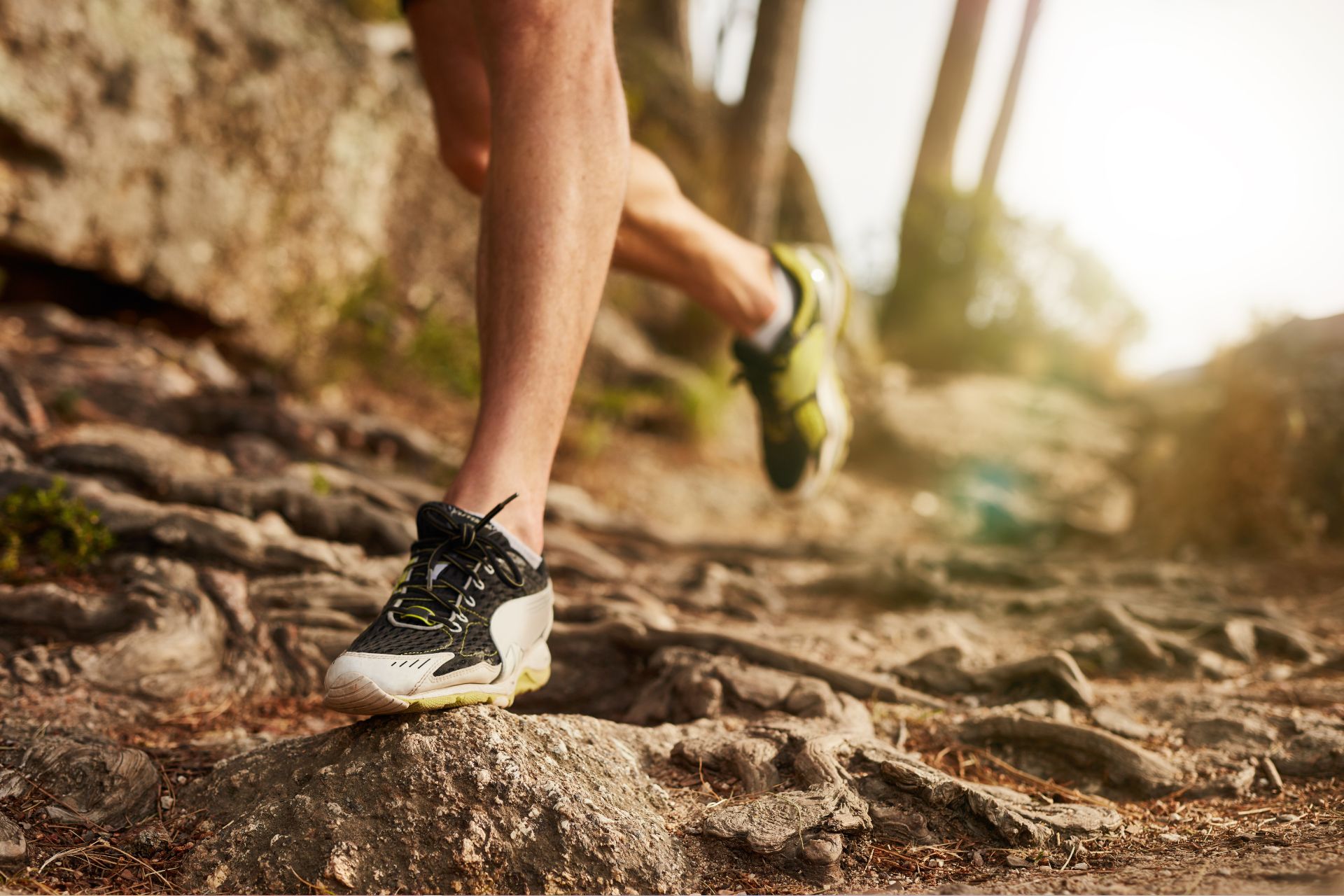
A road running shoe is built for a flat, predictable surface. Tarmac doesn’t move, doesn’t hide a root under leaf litter, and doesn’t turn to soup after rain. Trail shoes exist because the ground they’re designed for does exactly that. The outsole rubber is a different compound entirely, softer and stickier so it grips wet rock and loose stone rather than skating across it. Lugs, the small rubber blocks moulded into the sole, run anywhere from 2mm on shoes built for packed gravel to 6mm or more on shoes built for boggy fell terrain. Get that wrong and you’re either gripping badly on the ground you’re actually running, or wearing tread down fast on hard-packed paths that never needed it in the first place. Weight tends to differ too. A dedicated trail shoe usually carries more structure through the upper and midsole than a lightweight road racer, because that structure is doing a job on uneven ground that a road shoe never has to do.
The Anatomy of a Trail Running Shoe
Four features separate a genuine trail shoe from a road shoe with a knobbly sole glued on.
A rock plate sits between the midsole foam and the outsole. It’s a thin sheet of plastic or, on more expensive shoes, carbon fibre, and its entire job is stopping a sharp stone from bruising the sole of your foot through the cushioning. Not every trail shoe has one. Cheaper models sometimes skip it, which shows up fast on anything rocky.
A reinforced toe bumper and abrasion-resistant upper protect against rock strikes and root catches that would tear through a standard road mesh within a few runs.
A gusseted tongue, stitched to the upper on both sides rather than left loose, stops grit and small stones working their way in through the gap.
Mesh built for drainage rather than breathability lets water out fast after a stream crossing, instead of holding it against the foot for the rest of the run.
Grip and Traction on Different Terrain
Lug pattern matters as much as lug depth. Multi-directional lugs, angled in different directions across the sole, bite into loose ground on both climbs and descents. A shoe with lugs running one direction only grips fine going uphill and slides on the way back down, which is exactly the wrong failure point on technical terrain. Rubber compound plays its part too. Vibram Megagrip, used across several premium trail models, is built to stay tacky on wet rock specifically, where a standard rubber compound turns greasy the moment it gets damp. None of this matters much on a dry, hard-packed towpath. It matters a great deal on wet Lakeland scree at eight in the morning.
Cushioning and Stability on Uneven Ground
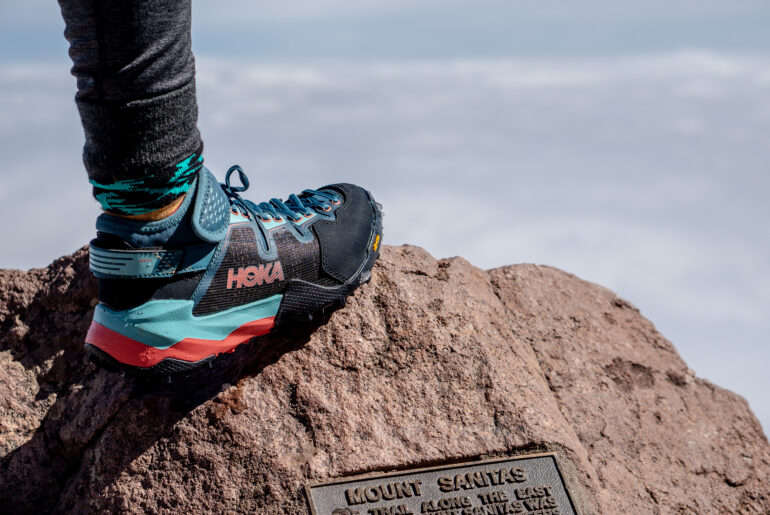
More foam, softer landing, that’s been road running’s whole direction for a decade now. Stack heights keep climbing. Put that same soft, tall stack on a rocky path though and it turns vague fast, the foot rolling slightly on every uneven step instead of sitting flat. Trail midsoles solve this by going firmer and wider at the base rather than softer. Stability over cushioning, essentially, at least until recently. A handful of trail shoes now manage both, tall stack heights with a wide enough platform underneath to keep it from feeling sloppy on technical ground. The Hoka trail running shoes range built its reputation on exactly that combination, more foam than most competitors dare use, propped up by a base wide enough to stay steady on a loose or rocky trail.
Do You Actually Need Trail Running Shoes
Canal towpath. Park tarmac. Well-maintained gravel. None of that needs a proper trail shoe, and a hybrid, a walking shoe or even a standard road shoe covers it fine, no argument there. Wet rock changes things. So does a root system, or moorland, or anything with real technical demands underfoot. Road shoes on root-covered singletrack aren’t a minor compromise, they’re how ankles get rolled, since road outsoles carry neither the lug depth nor the rubber compound needed to hold on loose or wet ground. The honest rule is simple, buy for the terrain in front of you, not the terrain you’re hoping to eventually run. Get that right and what are trail running shoes actually for on your specific routes stops being a complicated question.
Choosing the Right Pair
Fit matters more here than it does on the road. A foot that shifts around inside the shoe on a technical descent blisters fast, no way round that, and a decent pair of running socks does more to prevent that than most people give them credit for. Snug through the midfoot and heel is the target, with slightly more room in the toe box than a road shoe gives you, enough for the foot to splay on impact without sliding forward into the front of the shoe every time the trail drops away. Distance and terrain decide the rest. Long days on varied, technical ground call for more underfoot protection, a rock plate as standard rather than an afterthought. Shorter, faster sessions on easier terrain want the opposite, lighter, lower to the ground, more direct feel for what’s underfoot. Long days also tend to need somewhere to carry water and a shell, which is where a lightweight race pack comes in alongside the shoes. Adapt Outdoors stocks trail running shoes across that whole range, the well-cushioned Hoka trail running shoes for anyone grinding out long miles on tired legs, and the lighter, more responsive On Running trail shoes for runners who’d rather feel the trail than float over it.
FAQs
What Are Trail Running Shoes Best Suited For?
Technical, uneven or wet terrain where grip and underfoot protection matter more than raw speed. Fell paths, root-covered singletrack, wet rock and boggy moorland are the conditions they’re built for, rather than flat gravel or tarmac where a standard road shoe does the job just as well.
Can You Wear Trail Running Shoes on the Road?
Yes, occasionally, though it isn’t what they’re built for. The firmer midsole and aggressive lugs make road miles feel harsher underfoot than a dedicated road shoe, and the lugs wear down faster on tarmac than they would on soft ground. Fine for the odd mile connecting one trail to another. Not ideal as a daily road shoe.
Do Trail Running Shoes Fit Differently to Road Shoes?
Often, yes. Many trail shoes run slightly roomier through the toe box to allow for foot swelling on long days and to stop toes jamming forward on steep descents. Heel and midfoot fit tends to be snugger than a road shoe to prevent the foot shifting inside the shoe on technical ground.
How Long Do Trail Running Shoes Last?
Most last somewhere between 300 and 500 miles, similar to road shoes, though rocky or abrasive terrain wears the outsole down faster than soft, forgiving trails. Check the lugs regularly, and clean mud off after wet runs rather than letting it dry on, since grit left in the outsole grinds the rubber down faster. Our footwear cleaning and proofing range covers what you need for that.
Is a Rock Plate Necessary?
Not for every runner. If you’re mostly on soft, forgiving trails, you can live without one. Anyone running regularly on rocky, technical ground will feel the difference within the first few runs.
Can Beginners Use Trail Running Shoes?
Yes, and there’s no reason to wait until you’re “experienced enough.” The extra grip and protection make technical terrain more approachable for a new runner, not less, since the shoe is doing more of the work that experience would otherwise cover.
Getting the wrong shoe for the ground you run on is one of the most common, and most avoidable, mistakes in trail running. Adapt Outdoors carries trail running shoes across a full range of terrain, cushioning levels and price points, with staff on hand who actually run the routes they’re recommending shoes for. Get in touch or head into store to find the right pair for the ground you’re actually covering.