Twenty two litres. Thirty three. Forty four. None of those numbers mean anything until you know what you’re actually doing with the bag. Ask ten people in the shop what size backpack they need and most can’t answer straight away, not because they’re vague about it, but because nobody explains capacity in terms of what actually goes inside.
This backpack size guide works through activity first, starting with the smallest packs for everyday carry and building up to the volume you need for an overnight trip. If you already know roughly what litre range you’re after and want help getting the fit right rather than the volume, our guide to hiking daypack fit covers torso length and hip belt sizing properly.
Under 10 Litres for Everyday Carry and Short Walks
A bag under 10 litres isn’t for a hike. It’s for the walk into town, the school run, the commute where you need your hands free and nothing more than a phone, a wallet, keys and maybe a water bottle. The Osprey Daylite Sling holds 6 litres, which sounds tiny until you try fitting more than the basics into it and realise that’s the entire point. It sits across one shoulder rather than two, close to the body, and swings round to the front without you having to take it off. That’s not a comfort compromise so much as a different job to a full pack. If what you carry most days fits in your coat pockets, this is still worth owning for the days it doesn’t.
10 to 15 Litres for Short Hikes and Day Trips
Add a proper water bladder, a spare layer and some food, and 10 litres starts to feel tight fast. 10 to 15 litres is where a genuine short hike lives, big enough for the extras without turning into a pack you have to think about wearing. The Osprey Talon 11 sits right at this end. Low profile, built to sit close and disappear once you’re moving rather than announce itself. What separates it from anything under 10 litres is the harness. A proper hip belt and a ventilated back panel, not a strap over one shoulder. For a two or three hour walk on a clear path, that’s the difference between a pack you forget about and one you keep adjusting.
20 to 28 Litres for a Standard Day Hike
The most common question we get in store is what backpack size do I need for day hiking, and 20 to 28 litres answers it for most people walking established paths for a full day. That’s enough room for food, water, a waterproof layer and a map or GPS, without carrying dead weight you’ll never touch. The Osprey Talon 22 and Osprey Talon 26 both sit inside this bracket. Four litres doesn’t sound like much written down. It matters the moment you’re carrying a bulkier waterproof, a compact camera, or lunch for two rather than one. Go with the 26 if you tend to overpack slightly, and the 22 if you’re disciplined about what goes in the bag. The Talon 26 also comes in Scoria Blue if black isn’t what you’re after.
28 to 35 Litres for Longer Days and More Kit
Ask what size backpack for hiking suits most of the UK year, and the honest answer sits between 28 and 35 litres. Not because that’s some ideal number on a chart, but because British weather doesn’t commit to a season and neither should your pack. A 28 litre bag copes fine with a warm July walk. Push past 30 and there’s room for a proper waterproof, gloves, a hat and an extra layer without anything being stuffed in. The Osprey Talon Velocity 30 uses a mesh, ventilated back panel that suits warmer conditions best, also available in Dark Charcoal. The Osprey Talon 33 and Osprey Talon 33 Extended Fit carry the same 33 litre capacity, just on a standard or longer frame. If your torso length sits outside the usual range, that’s worth knowing before the shorter frame starts digging in on hour three. The 33 also comes in Phantom Grey.
40 Litres and Above for Overnight Trips and Camping
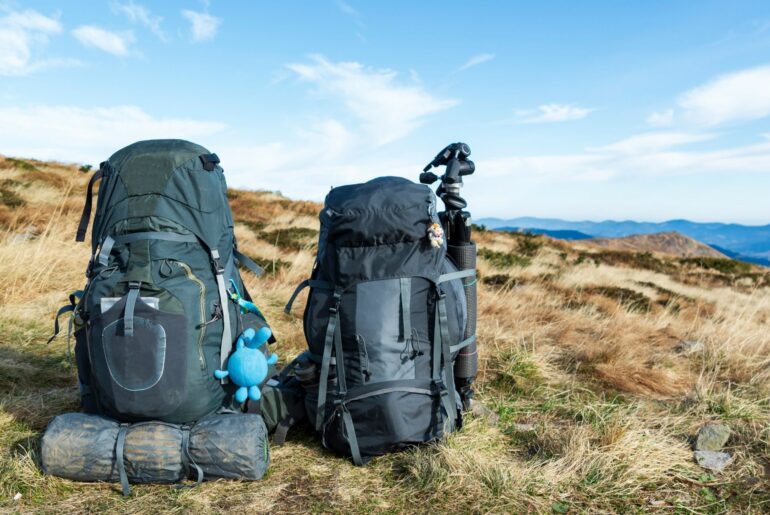
Once a sleeping bag, extra food or kit for more than one day comes into it, you’re above 40 litres. Full stop. The Osprey Talon 44 sits here, built for overnight hikes and light camping rather than a day pack pushed past what it was ever designed to carry. Strapping a sleeping bag to the outside of a 26 litre pack because it’s the one already in the cupboard is how straps snap and balance shifts halfway down a descent. Buy for the trip you’re actually doing, not the one you did last time.
Litres Are a Starting Point, Not the Whole Answer
Capacity gets you into the right bracket. It doesn’t account for how the weight actually sits once the bag’s on your back. Two packs at the same volume can carry completely differently depending on where the hip belt sits and how well the frame transfers weight off your shoulders. What size backpack do I need is rarely just a question about volume. It’s a question about fit as much as capacity, and litres alone won’t answer it. A hip belt doing its job properly takes most of the load onto your hips rather than your traps. That’s usually the difference between finishing a hike tired and finishing it in real discomfort. None of that shows up in a litre figure printed on a swing tag. It shows up in how the pack sits against your specific torso, and that’s exactly what our fit guide covers once you’ve settled on a size from this page.
Backpack Size Guide at a Glance
- Under 10 litres – everyday carry and short walks
- 10 to 15 litres – short hikes and day trips
- 20 to 28 litres – a standard day hike
- 28 to 35 litres, longer days and more kit
- 40 litres and above, overnight trips and camping
Find Your Size
Use this backpack litre size guide as the starting point, not the final word. Every activity above has a bracket that fits it, but the real test is trying the pack on loaded, not picking a number off a page. Head into the full packs and accessories range to compare sizes side by side, and take the one that fits your actual trips rather than the one that looks biggest for the money.